
Navigating Grief When a Parent Moves to Memory Care
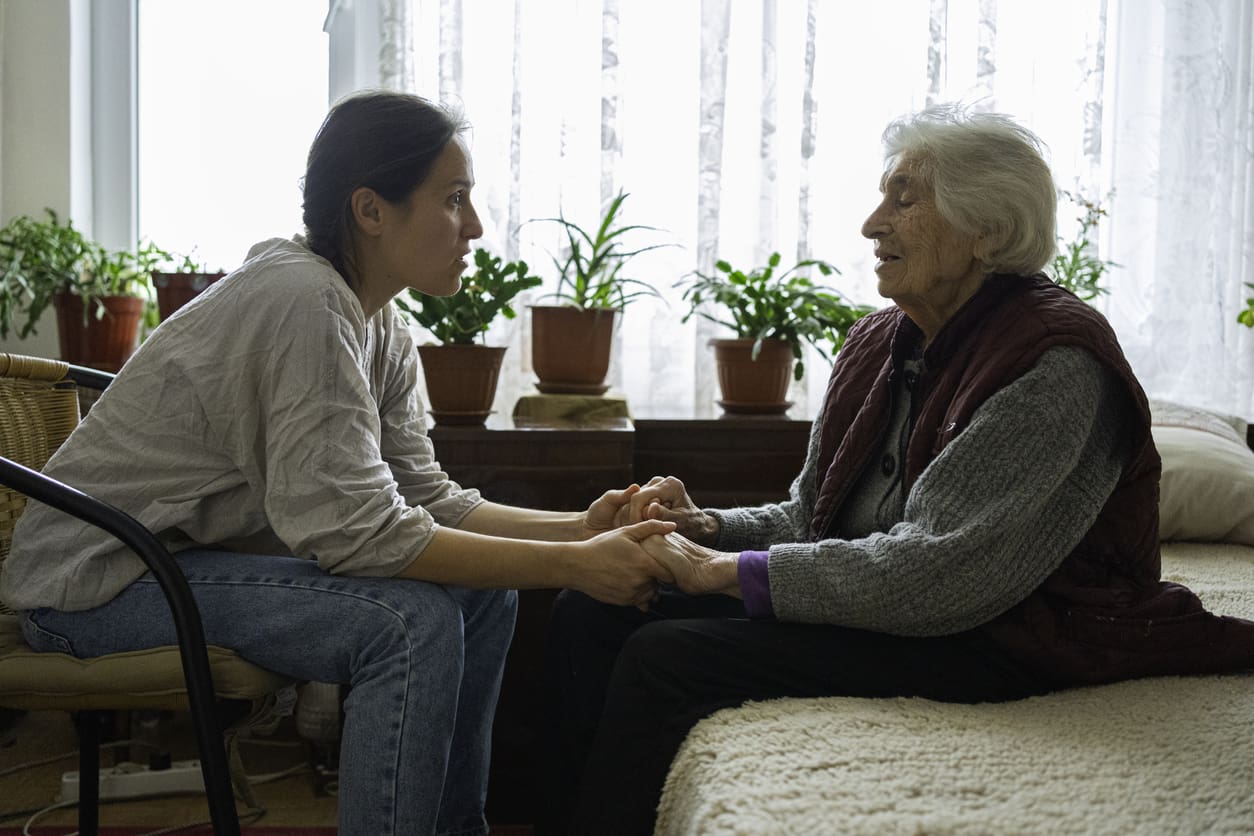
When a parent moves to memory care, families often expect to feel relieved. And many do, especially if they have been providing demanding care at home for months or years. What they do not always expect is the grief.
It arrives alongside the relief, sometimes quietly, sometimes in waves. Grief over the parent they are losing to dementia. Grief over the relationship as it was. Grief over the future they imagined, including the conversations they will not have, the memories that will not be made the way they hoped.
This grief is real, it is valid, and understanding it can help families move through the transition with more compassion for themselves.
What Families Are Actually Grieving
Memory care transitions involve a particular kind of loss called anticipatory grief or ambiguous loss, where the person is still physically present but the relationship has changed in fundamental ways.
You might be grieving:
- The parent who used to know your name, your children’s names, your shared history
- Conversations that are no longer possible
- The role reversal that has already happened
- A sense of family continuity or tradition that dementia has disrupted
- Your own imagined future of being cared for by your parent in some form
- The burden of guilt, even when you made the right decision
None of these losses require an explanation or a justification. They are real, and the grief they bring is appropriate.
The Guilt That Comes With It
Many families carry guilt alongside grief, even when the move to memory care was clearly the right decision and even when their parent is thriving in the new environment.
Guilt tends to show up as “I should have kept them home” or “I promised I would never do this” or “Am I doing this for them or for me?” These are painful thoughts. They are also very common, and they do not mean you made the wrong choice.
Memory care communities exist precisely because the level of supervision, safety, and specialized support that people with significant dementia need is not something a single family caregiver can provide around the clock. Choosing professional care is not abandonment. It is a decision made out of love.
How the Grief Tends to Evolve
In the first weeks after a move, many families describe a complicated mix of emotions: sadness, relief, guilt, love, exhaustion. Visits can be hard, especially if your parent does not always recognize you or expresses distress.
Over time, many families find that visits become easier and that a new kind of relationship develops. It is a relationship built around presence rather than shared memories: sitting together, sharing a meal, holding a hand, listening to music. These moments have real value, even when conversation is not possible.
The grief does not disappear, but it tends to settle into something more manageable as the new normal becomes familiar.
Finding Support During This Time
You do not have to navigate this alone. Options that can help:
Caregiver support groups. Many hospitals, community centers, and memory care organizations offer support groups specifically for family members of people with dementia. Talking with others who understand the specific experience of dementia caregiving can reduce isolation significantly.
Counseling. A therapist familiar with grief or elder care issues can provide a space to process the emotions without minimizing them.
Social work support. Many assisted living communities have staff who can connect families with community resources or simply provide a listening ear.
Honest conversations with family. Siblings and other relatives sometimes grieve differently or at different times. Naming what you are experiencing can open those conversations.
Staying Connected After the Move
Maintaining a meaningful relationship with a parent in memory care looks different from what it was before, but it is still possible. Short, calm visits often work better than long ones. Music from your parent’s era, familiar photos, gentle physical touch, and simple sensory pleasures can all create moments of connection even when language has become limited.
Families exploring memory care options in Neenah or memory care in Pewaukee often ask how the care team supports family involvement. The answer matters. A good memory care environment sees families as partners in care, not occasional visitors.
If you are in the early stages of this transition and finding it harder than you expected, please know that is a normal response to a genuinely hard thing. Give yourself time, lean on whatever support you can find, and recognize that choosing good care for your parent, even when it is painful, is one of the most loving things a family can do.