
How to Involve Grandchildren in Visiting a Memory Care Resident
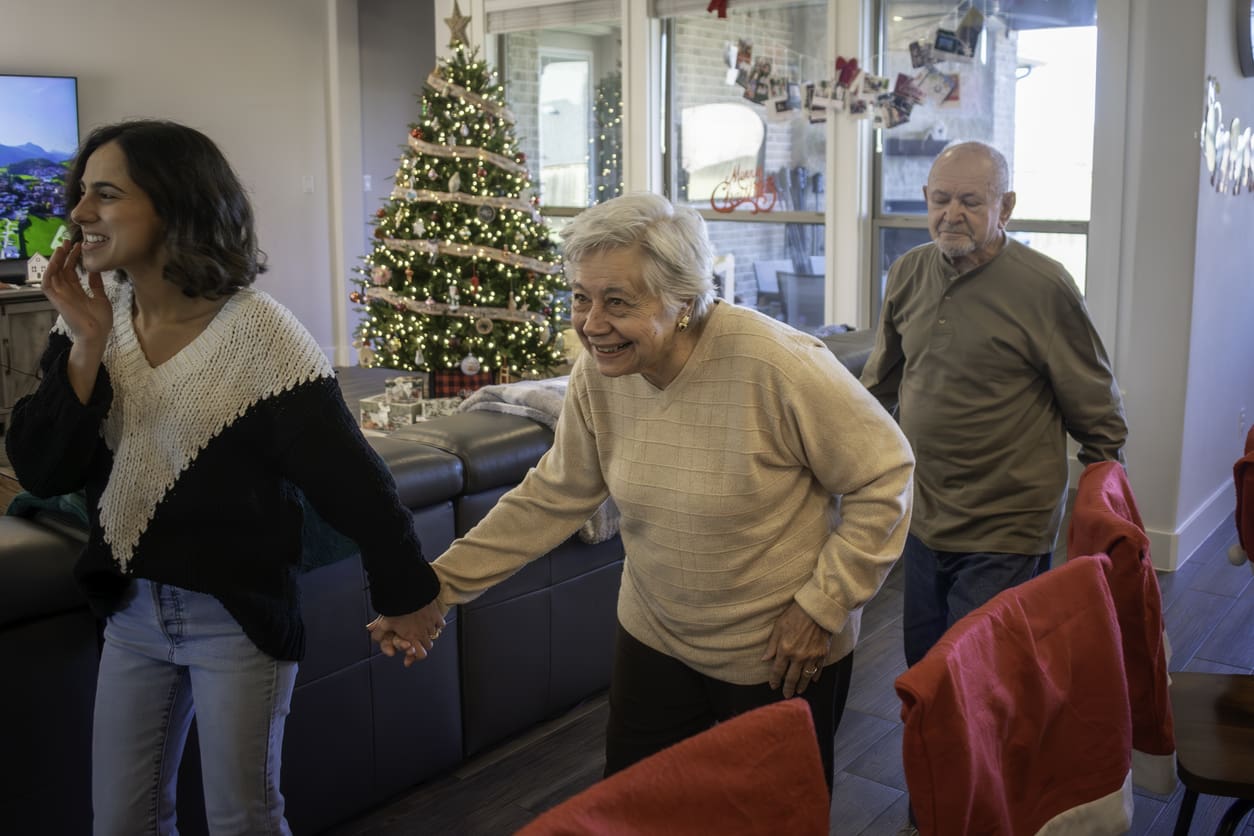
When a grandparent moves to memory care, families sometimes assume that grandchildren should be shielded from visits. The reality is more nuanced. Children and teenagers can have genuinely meaningful visits with a grandparent who has dementia, and those visits can be valuable for the grandparent too. The key is preparation.
Why Children Can Be Good Visitors
People with dementia often respond warmly to children and young people. The energy, openness, and lack of self-consciousness that children bring can create a relaxed interaction that feels easier than visits from adults who are visibly upset or uncomfortable.
Children also tend to engage in the present moment rather than comparing their grandparent to who they used to be. A five-year-old playing a simple game with a grandparent who has dementia does not carry grief about the past; they are just together right now. That can be exactly what the visit needs.
At the same time, the experience can be confusing or upsetting for children who are not prepared for what they will see. Honest, age-appropriate preparation is what makes the difference.
Preparing Children Before the Visit
Name what is happening. Use simple, direct language that matches the child’s developmental level. For a younger child: “Grandma has a sickness that affects her memory. She might not always remember your name, and that is okay. It does not mean she does not love you.” For older children and teenagers, you can go into more detail about what dementia is.
Prepare them for what they will see. Describe the community briefly. Mention that the residents are older adults who may need help with things like walking. Let the child know that Grandma may say something that seems confusing, and that is part of the sickness.
Explain that some things might change. If Grandma used to bake cookies with them and that is not possible anymore, acknowledge the loss. Let the child know that she may not remember their name, and practice what to say: “Hi Grandma, it’s me, [name]. I came to see you today.”
Tell them what to do if they feel uncomfortable. Make sure they know it is okay to step outside with you if the visit feels like too much. Having a clear exit option reduces anxiety.
During the Visit
Go in with an activity. Open-ended conversation can be difficult with someone who has significant memory loss. A simple activity is much easier: looking through a photo album together, listening to music from the grandparent’s era, doing a simple puzzle, coloring, or painting. Something to do together takes the pressure off conversation.
Follow the grandparent’s lead. If the person with dementia wants to talk about something from the past (whether or not it is accurate), let the conversation go there. Children can be remarkably natural at this: going along with a grandparent’s story rather than correcting it.
Keep visits shorter for younger children. Thirty to forty-five minutes is often enough for younger kids. A shorter visit that ends on a good note is better than a long one that trails off into discomfort.
Normalize any unusual behavior quietly. If a grandparent says something confusing, redirect gently and quietly explain to the child afterward if needed.
Communities like assisted living near Menasha on Irish Road and those offering senior living in the Milwaukee area typically have space where families can gather, make it easier to bring simple activity supplies, and have staff who can help if a visit becomes difficult.
After the Visit
Talk with the child afterward. Ask how they felt. Answer questions honestly and age-appropriately. Acknowledge that it can be sad to see someone you love affected by this kind of illness, and that having those feelings is completely normal.
Over time, regular visits build familiarity and reduce the anxiety that often comes from the unfamiliar. Children who visit regularly report less fear and more comfort with the experience. They often come to feel that these visits are important to them too, not only to their grandparent.
For Teenagers
Teenagers can often handle more context and have more meaningful engagement than younger children. Invite them to be involved in conversation, in choosing activities to bring, or in other ways that give them a real role. Many teenagers who feel useful and included find these visits genuinely rewarding. Teenagers who feel pushed into something awkward often shut down.
The relationship between a grandparent and grandchild does not have to disappear because of dementia. It changes, but connection is still possible, and for children who grow up having visited regularly, those memories of presence and love tend to last.