
How to Evaluate Assisted Living Staff During a Tour
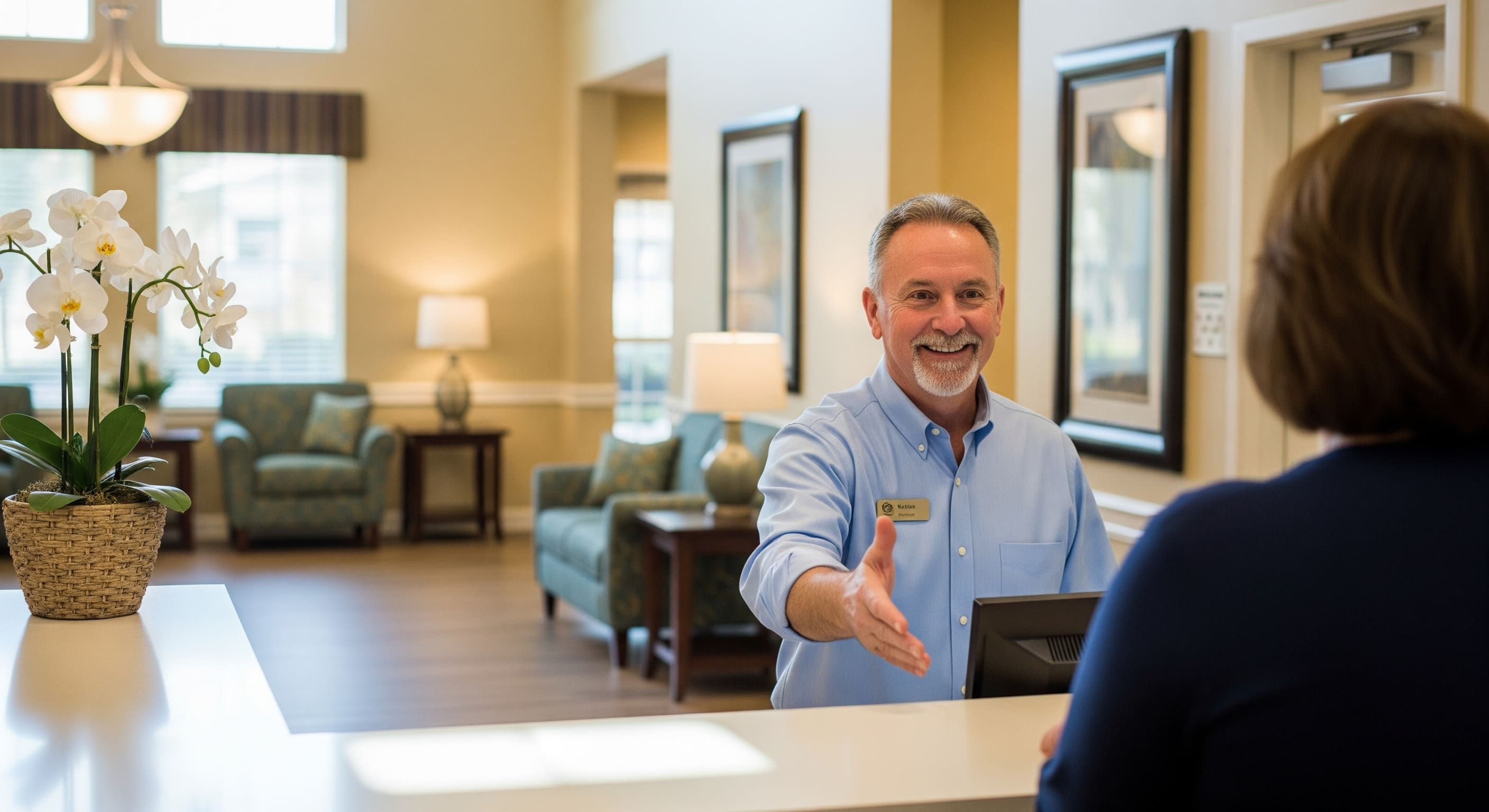
When families tour an assisted living community, they often spend a lot of time looking at the physical space: the rooms, the dining area, the outdoor areas. Those things matter. But the single most important factor in determining whether your parent will thrive is the staff.
The people who show up every day, who know your parent’s name, who help them in the moments that require real care and patience: these are the people who will define what daily life actually feels like. Here is how to evaluate them during a tour.
Watch, Do Not Just Listen
A tour director will tell you all the right things about staffing ratios, training programs, and care philosophy. Listen, but pay attention to what you actually observe.
Notice how staff interact with residents in passing. Do they make eye contact? Do they use the resident’s name? Is there warmth in the interaction, or does it feel transactional and rushed?
Pay attention to residents’ expressions. Residents who feel comfortable with their caregivers tend to look comfortable. Watch for ease, not just absence of distress.
Observe the environment at mealtimes if possible. Meals are a good window into staff culture. How do staff engage with residents who need help eating? Is the dining room calm and orderly, or chaotic?
Notice whether staff seem like they enjoy being there. Energy and warmth are visible. So is detachment and fatigue.
Questions Worth Asking Directly
Beyond observation, ask the following during or after the tour:
What is your staff turnover rate? This is one of the most revealing numbers in senior care. High turnover means residents are constantly adjusting to new faces, and it often signals underlying problems with management or culture. Low turnover means staff are staying, which usually means residents are building genuine relationships.
How long has your current director been in place? Leadership stability matters. The director sets the culture and standards.
How do you handle nights and weekends? Some communities staff down significantly during off-peak hours. Understand what coverage looks like around the clock, not just during business hours.
What training do caregivers receive beyond state minimums? Dementia care training, communication techniques, and de-escalation skills go well beyond what the state requires. A community that invests in staff development will usually show it.
How do you handle situations when a staff member calls in sick? The answer tells you whether the community has a genuine backup plan or relies on staff working double shifts and burning out.
What You May Not Be Able to Assess in One Visit
A single tour gives you a snapshot. You cannot always tell how a community handles a difficult situation, or what care looks like at 3 AM, or how a specific caregiver behaves when they are having a hard day.
That is why the following can supplement your tour:
Ask to speak with other families. A community proud of its staff will offer this. Hearing from a family whose parent has been there for two years gives you information a tour cannot.
Request the most recent state inspection report. This shows you what regulators found, and how the community responded.
Schedule a second visit at a different time of day. Morning and evening shifts may feel different. Dropping in during a meal or activity gives you a more complete picture.
Trust What You Observe
The goal of a tour is not just to get information. It is to get a sense of the community. When you walk through a building and see a caregiver stop to listen to a resident’s story, or a staff member cheerfully redirect a confused resident without losing patience, you are seeing the culture in action.
For families considering assisted living in St. Francis or Oak Creek senior care communities, the staff culture is worth weighting heavily. A beautiful facility with a disengaged team will not feel like home. A simpler space with warm, consistent caregivers often will.
Trust your observations, ask the hard questions, and take the time to visit more than once if something feels unclear. The right community will hold up under scrutiny.